
Meal Deals
Affordable solo meals powered by merchant partnerships.
Product & Design team
Sean Hughes (PM)
Amanda Han (Design)
Engineering team
Dong He (EM)
Sally Rong
Facundo Munoz Olaso
Vishal Nallanagulgari
Yansong Huang
Raymond Shi
Tucker Klutey
Logan Stach
Problem
Affordability is the #1 blocker to growth. It’s the #1 Eater reason for ordering less, for Eater churn, and it’s a top strategic priority for the business.
Project goal
Provide the best price and quality option for solo-eater meals in the Eats app.
Early hypothesis
To structurally lower the all-in cost of preparing and delivering food, we wanted to concentrate Eater demand to enable batching across food preparation and delivery logistics. We hypothesized that batched prep would drive merchant operational efficiencies, allowing more dishes to be produced on the same fixed cost base (labor, overhead).
Competitor example
Meituan's PinHaoFan (Chinese delivery app) is an ultra low-cost offering that uses timers and social group ordering to concentrate demand and enable batched merchant prep. Groups of 2 or more must form within a set time frame, otherwise the order is canceled and refunded.

Key social elements in PinHaoFan experience
First XP
We built a social, bulk-ordering experience where users could order together (“UberX Share for Eats”). These orders would then be prepared in bulk and delivered in batches.


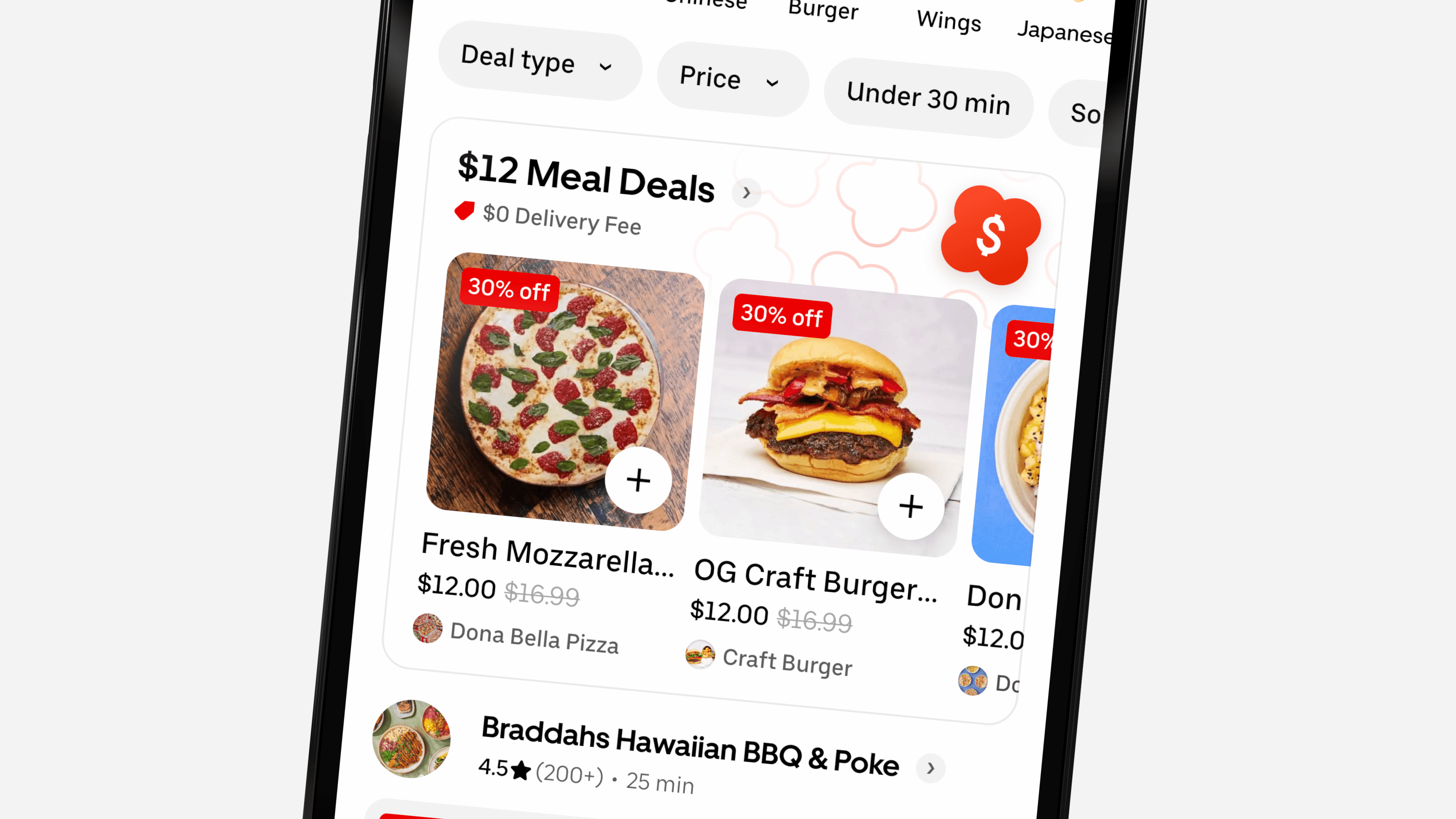
Home feed and landing page experiences

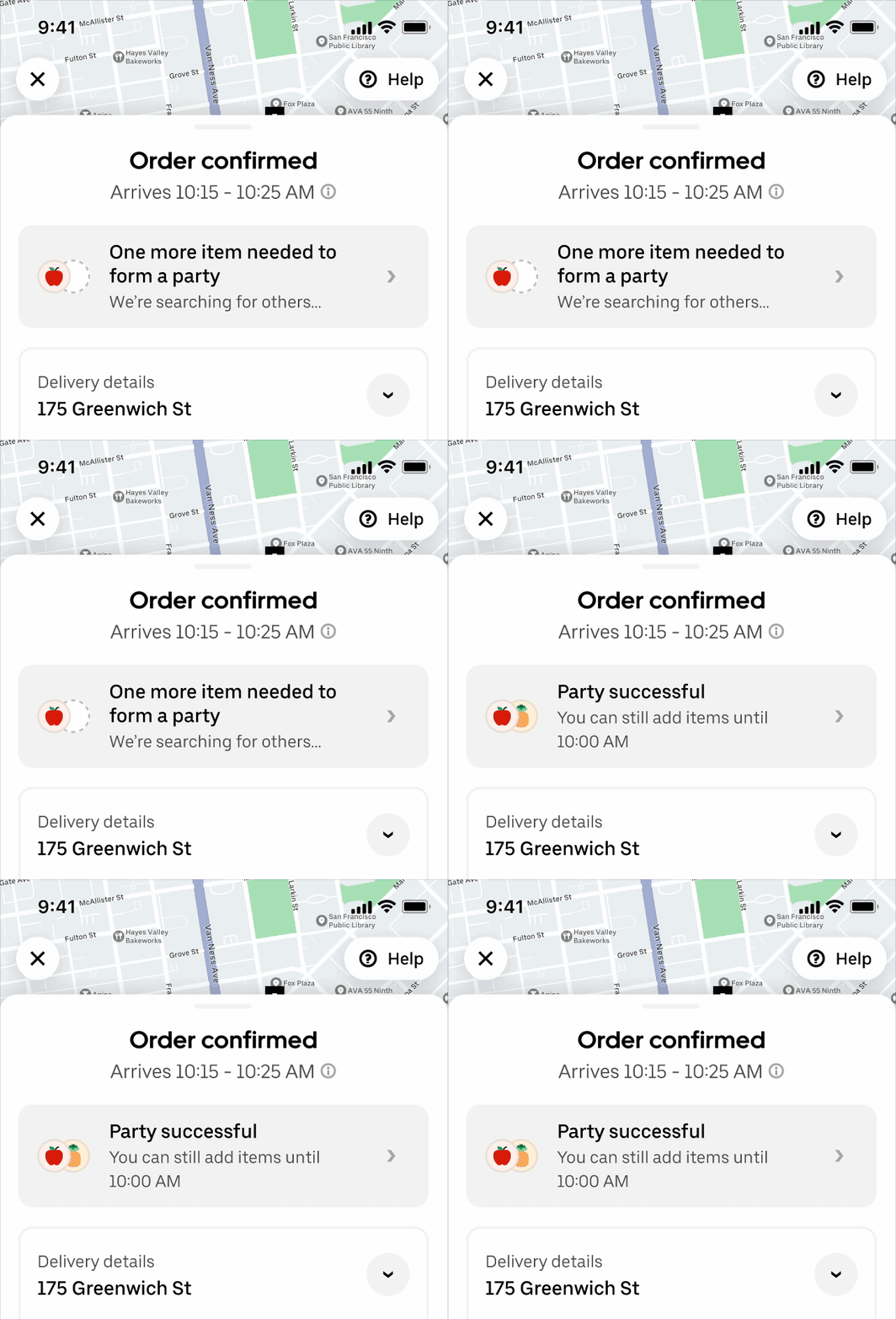
Party state indicated through avatars

Accepting an invite
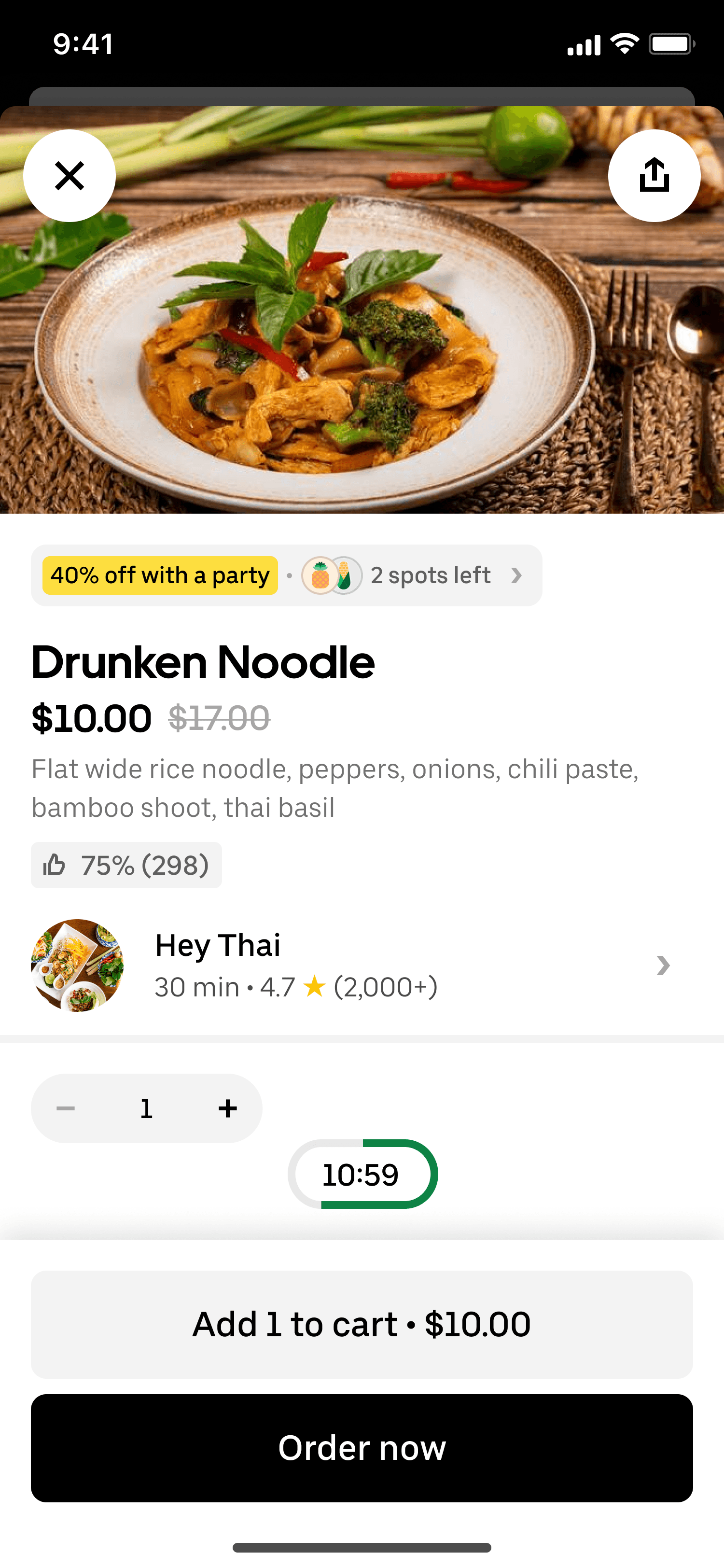
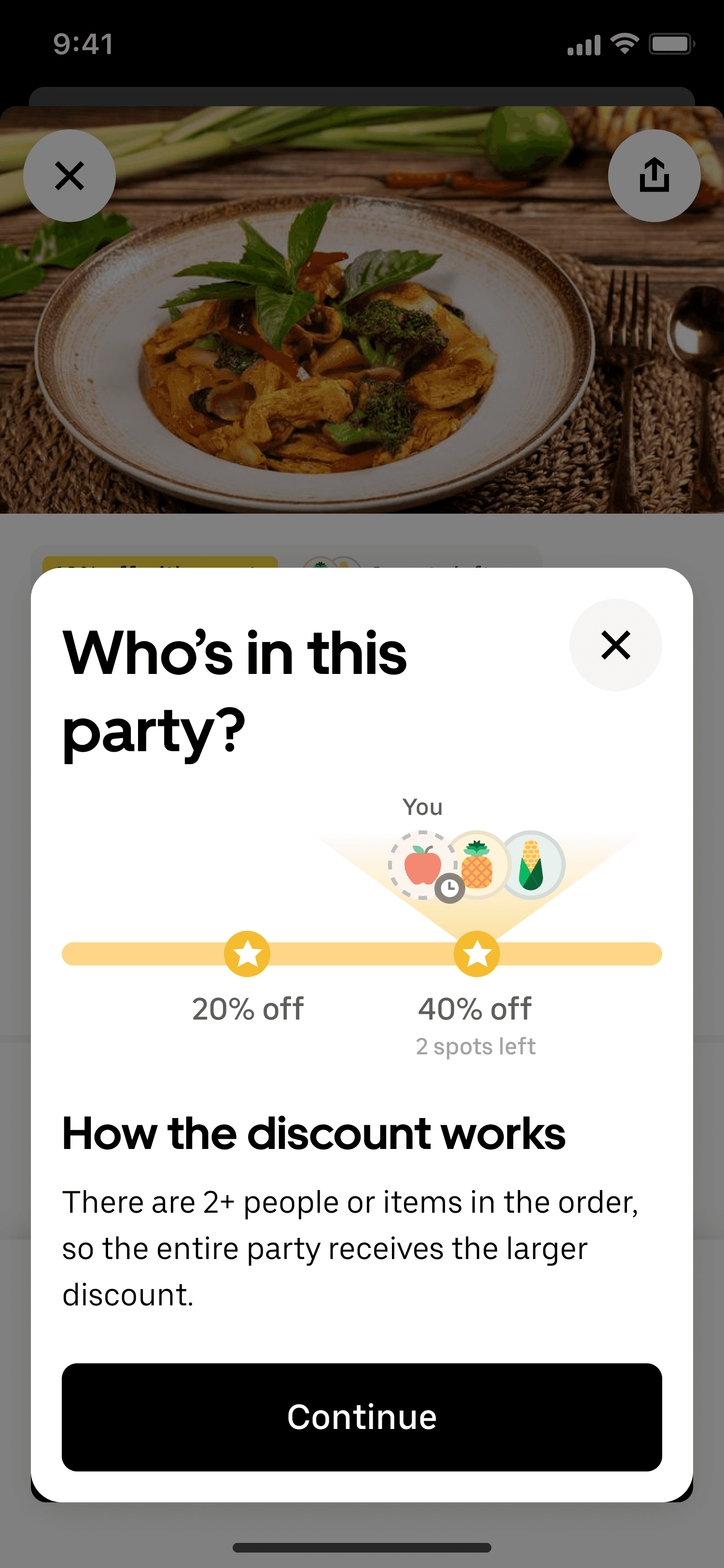
Earlier concepts of discount tiering, which we ended up moving away from
Dish selection & GTM strategy
We created affordable meals through a combination of tech, ops, and merchant integration. At the city level, teams partnered with Account Managers and Ops to onboard dishes that met the following criteria:
-> $9–12 post-discount, with at least a 30% discount
-> A complete meal for one (appropriate portion size and food type)
-> Based on existing popular items (e.g. top 3 dishes) or new dishes that meet price and portion targets
Funding model
Merchants funded item-level discounts, while Uber funded service and delivery fee discounts.
Learnings & pivot: From batching to volume
Batching mattered less to merchants than we expected. Merchant interviews showed that order volume, not batching, was the primary driver of value. Merchants cared most about incremental demand and new customers. This was great news, since it would allow us to dramatically simplify the user experience (remove timers, minimum group sizes, etc.).
We also learned that targeting no-customization dishes wasn’t necessary. Merchants preferred flexibility, using a mix of new dishes, combos, downsized items, and more to meet price targets.
Final designs
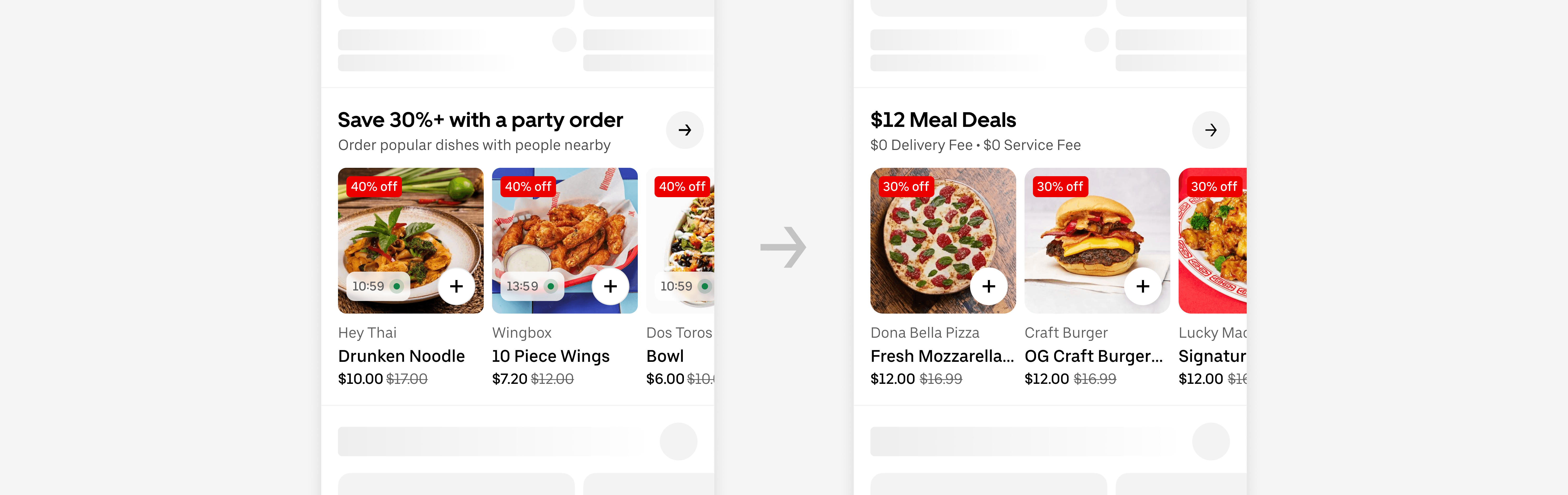
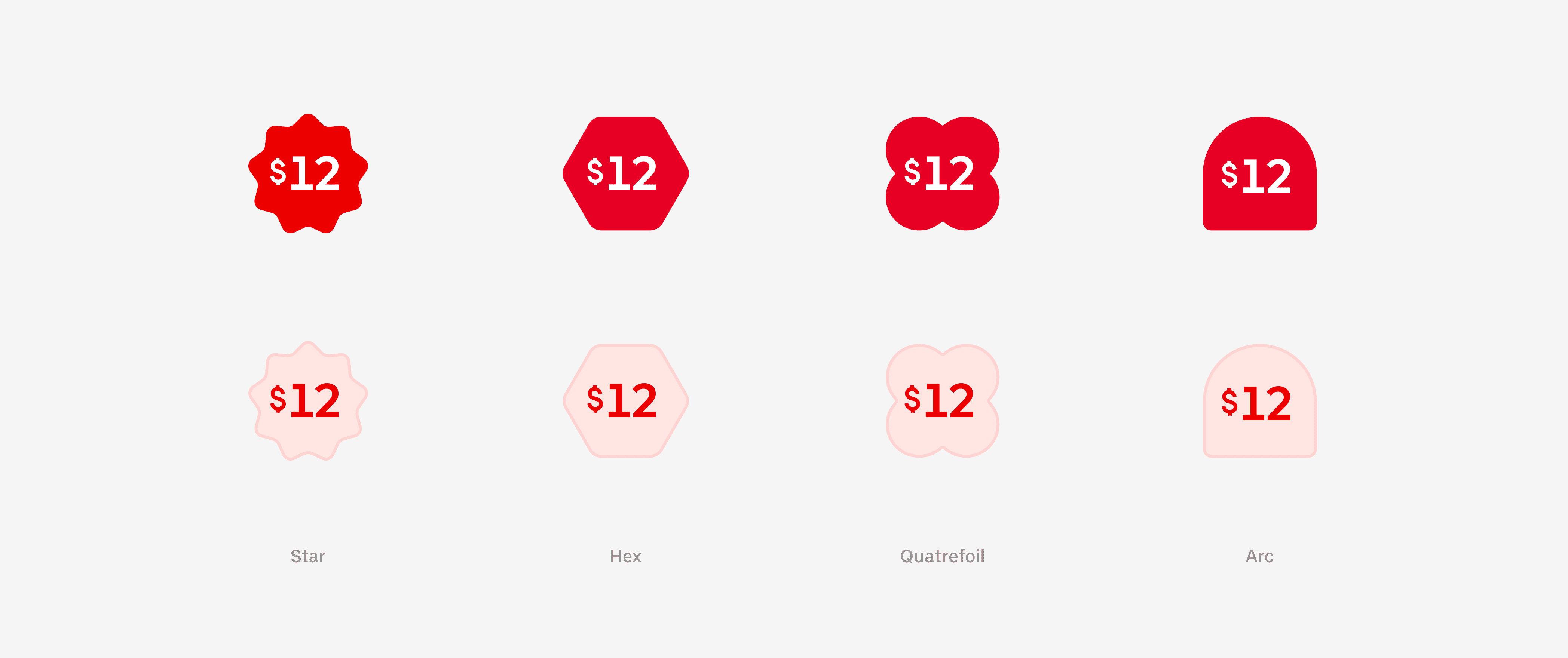
Branding pivot

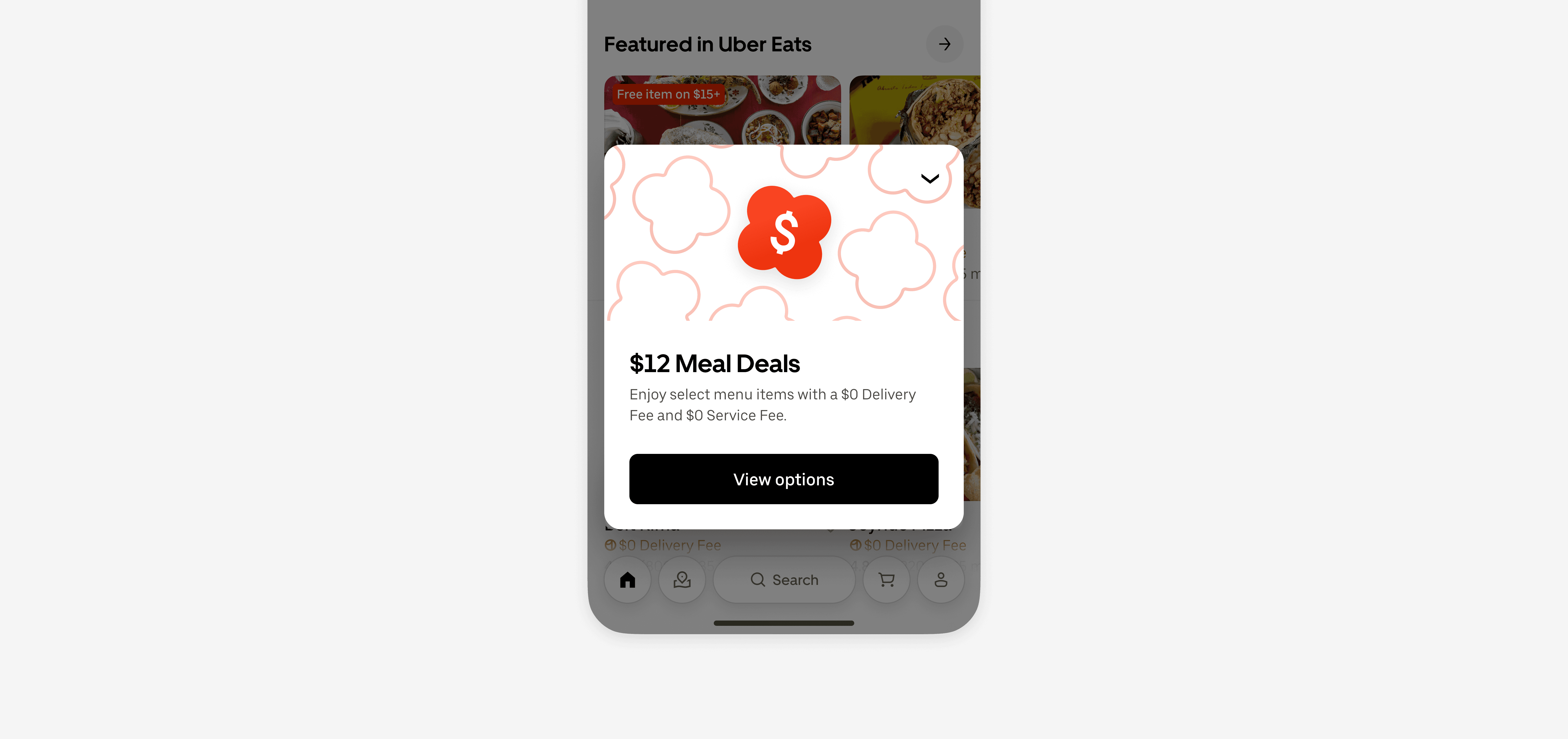
Integrating Meal Deals into existing platform experience & Offers visual language
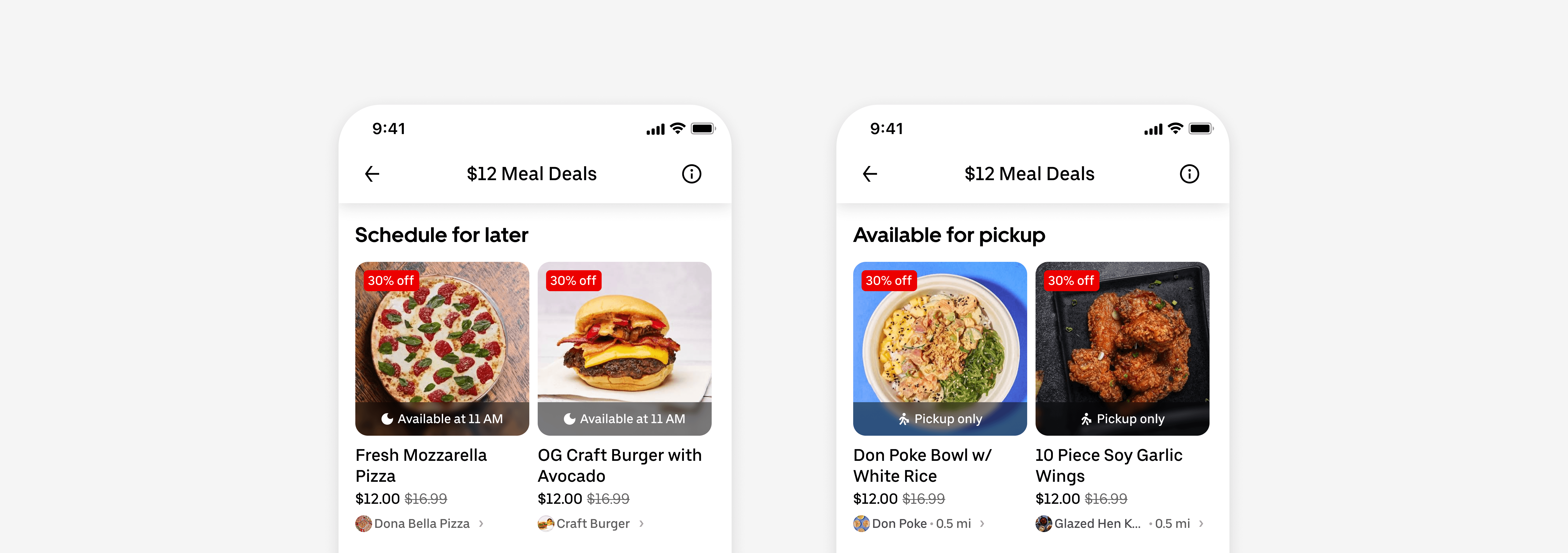
Adding scheduled and pickup to increase selection

Experimenting with including fees up front
Impact
In the days following the rebrand, we saw a dramatic increase in shortcut engagement (~10x) and total orders placed (~1.5-2x). Over a 4-week period across 16 cities, completed orders increased by +0.35% (equals thousands of orders!).
Initial results from social ordering experience also showed benefits for small & medium businesses:
-> 38% of store orders in Taipei came through "Party orders"
-> 71% of orders in NYC came from Eaters ordering from a store for the first time
Next steps
To scale coverage, we’re exploring integrating Meal Deals with existing item-level offers (e.g., BOGO, BOGA, % off) that meet quality standards for a full meal.
Today, discovery is fragmented—users have to navigate in and out of storefronts to find discounted items. We’re ideating on enabling a more seamless, item-first browsing experience.
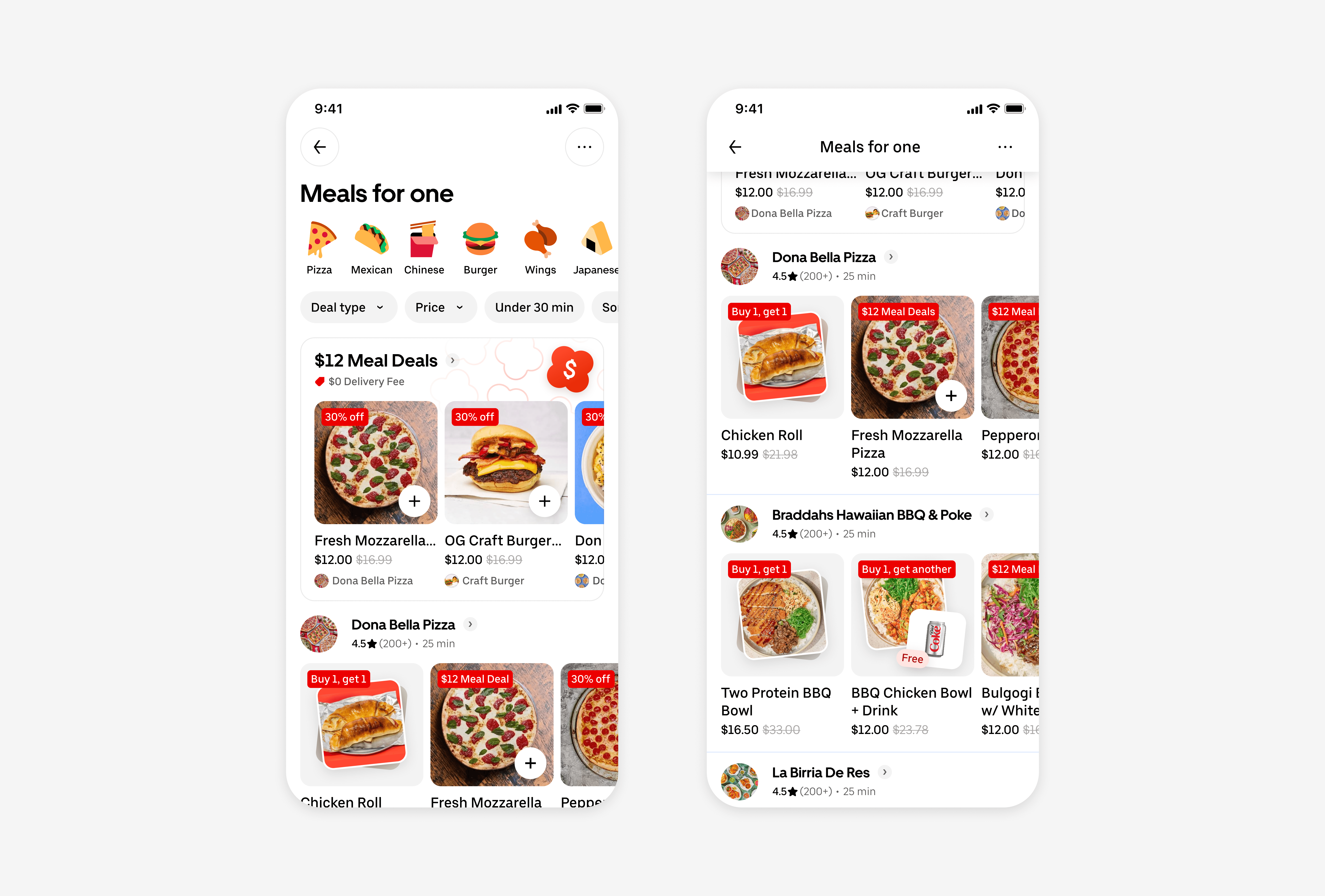
Integrating Meal Deals with item-level offers